
Croatia in August vs September: Which Month Is Better? (2026 Guide)
By Ryan Brown published on 10 August 2026
Spoiler alert: there isn't a wrong answer.
If you're itching for a late-summer European trip and dreaming about turquoise water, beach clubs, sunset cocktails and waking up in a different island every morning, you've probably found yourself asking the same question as thousands of others:
Should I visit Croatia in August or September?
The short answer? Both. August brings the electric energy of peak European summer, while September keeps the warm weather and crysta
l-clear sea, with a little more room to breathe. Whether you're travelling from the UK, USA, Australia or New Zealand, late summer is one of the best times to experience Croatia, especially if you're exploring by yacht.
Here's everything you need to know before choosing your Croatian island-hopping adventure.

Is August or September the Best Time to Visit Croatia?
If you're looking for the best time to visit Croatia, August puts you right in the heart of peak summer, while September moves into the shoulder season with warm weather, warm seas and fewer crowds.
Both offer long sunny days, warm Adriatic waters and vibrant island life. The biggest difference comes down to the vibe you're looking for.
Short on time? Here's our TL;DR version:
Choose August if you want:
- Peak summer energy
- Busy beach clubs and nightlife
- Festivals and events
- A lively social atmosphere
- Long daylight hours
Choose September if you want:
- Warm sea without the peak crowds
- More relaxed island towns
- Comfortable temperatures for exploring
- Easier restaurant and hotel reservations
- The same incredible sailing conditions
Whichever month you choose, you'll still experience everything that makes Croatia one of Europe's favourite summer destinations...just in a way geared toward you.
Considering August? Some late-August MedSailors Croatia departures are currently up to 40% off, so a last-minute trip could cost less than you think.
→ Check late-August Croatia availability
Croatia in August vs September: At a Glance
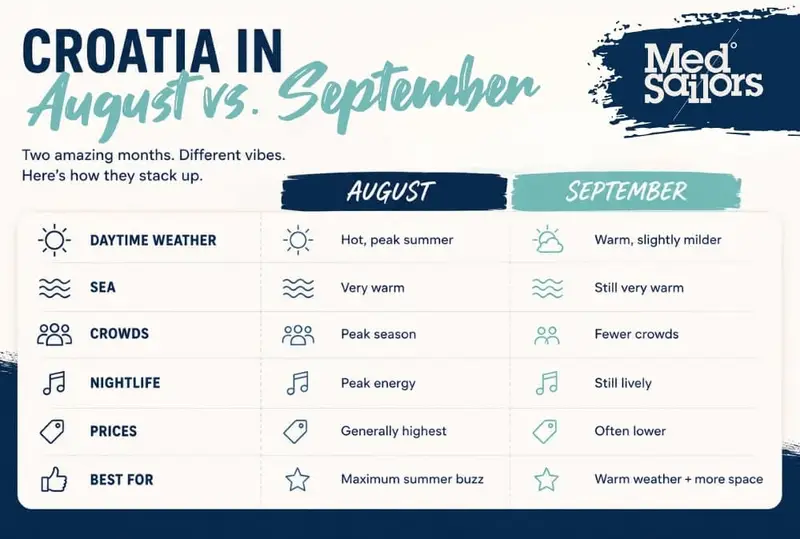
August is better if you want peak summer energy, the hottest weather and Croatia's busiest nightlife. September is better if you want warm seas, fewer crowds and potentially lower travel costs. For island hopping, both months offer excellent conditions, so the best choice comes down to the atmosphere you want.
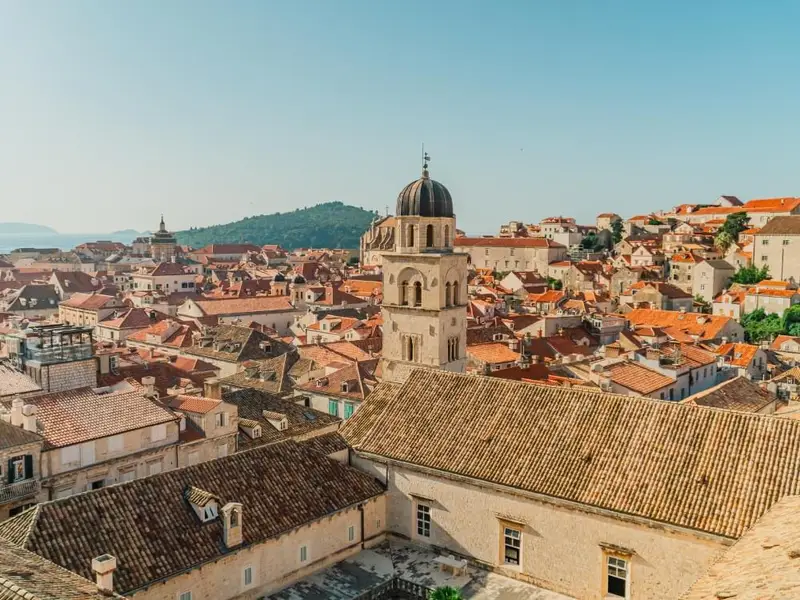
Croatia Weather in August vs September
Both August and September deliver classic Croatian summer weather, but August is generally hotter while September becomes slightly milder as the month progresses. The Adriatic also retains much of its summer warmth into September, which is why swimming and sailing remain such a big part of a late-summer Croatia trip.
Croatia in August: Weather, Crowds & What to Expect
August is Croatia at full volume. Sea temperatures in the Adriatic peak around 25-27°C (77-80°F) — this is as warm as the water gets all year, which matters more than people think when you're jumping off a boat into a hidden cove for the fifth time that day. Air temps regularly hit the low-to-mid 30s°C (high 80s-90s°F), the sun is out for 12+ hours, and the whole Dalmatian coast is buzzing.
This is peak season in every sense: peak crowds, peak nightlife, peak energy. If you want beach clubs still in full swing, a boat full of people who are all in "summer mode," and the warmest swimming of the entire year, August is your answer. It's also the busiest — book early, because cabins go fast.
[#titulo Titulo3]
Croatia in September: Weather, Crowds & What to Expect
Here's what people who've actually done a September sailing trip won't stop talking about: the water is still warm — the Adriatic holds onto its summer heat well into the month, often staying around 23-25°C (73-77°F) — but the crowds have thinned out considerably. Days are still sunny and comfortably warm (high 20s°C / low-to-mid 80s°F), without the intense midday heat of August.
What you actually get in September: quieter anchorages, easier last-minute availability, potentially better flight and accommodation prices, and a noticeably more relaxed pace on the islands themselves. If you've ever pictured yourself swimming in a secluded bay without ten other boats anchored next to you, September is when that fantasy actually happens.
September seems right for you? Save up to 30% on September Croatia final spaces on sale now.
→ Check September Croatia availability
[#aaaaaa Titulo2]

Is Croatia Cheaper in August or September?
If your budget is part of the decision, September generally has the edge (though some of our late-August Croatia tours are 40% off!)
August is peak season in Croatia, so flights, hotels and other accommodation can be more expensive due to high demand. As September arrives and the summer crowds begin to ease, you may find better deals on flights and accommodation, particularly later in the month.
That said, Croatia is still very much in summer mode. Restaurants, bars, beach clubs and activities remain open, the Adriatic is warm enough for daily swims, and the islands still have plenty of atmosphere. September can give you much of the August experience, often with fewer crowds and a little more money left for cocktails in Hvar.
[#aaaaaa Titulo1]
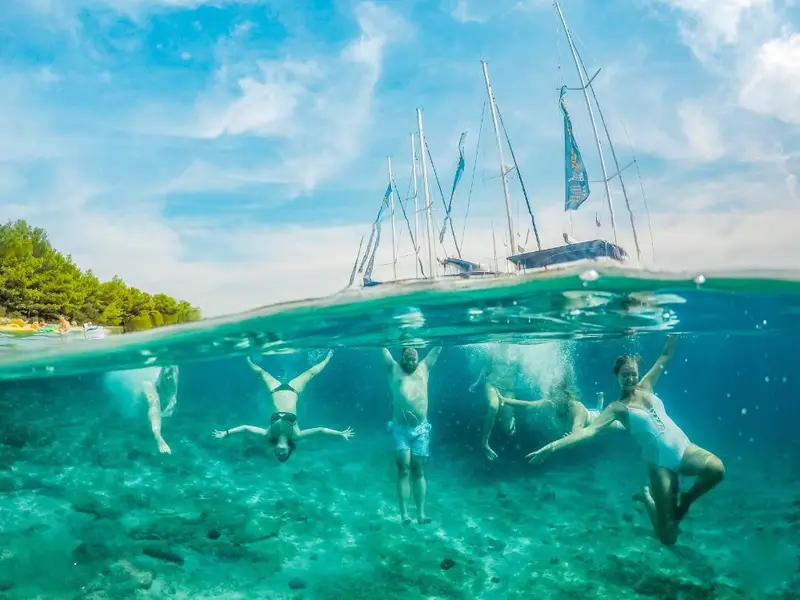
Can You Still Swim in Croatia in September?
Absolutely.
This is one of the most common questions people search for before booking a Croatia holiday.
September isn't the beginning of autumn in Croatia. It still feels very much like summer, especially along the Dalmatian Coast and islands.
Expect:
- Warm sea temperatures
- Sunny afternoons
- Plenty of beach days
- Swim stops almost every day on an island hopping trip
For many travellers, September actually offers the perfect balance of sunshine and comfort without the intense midday heat that August can occasionally bring.
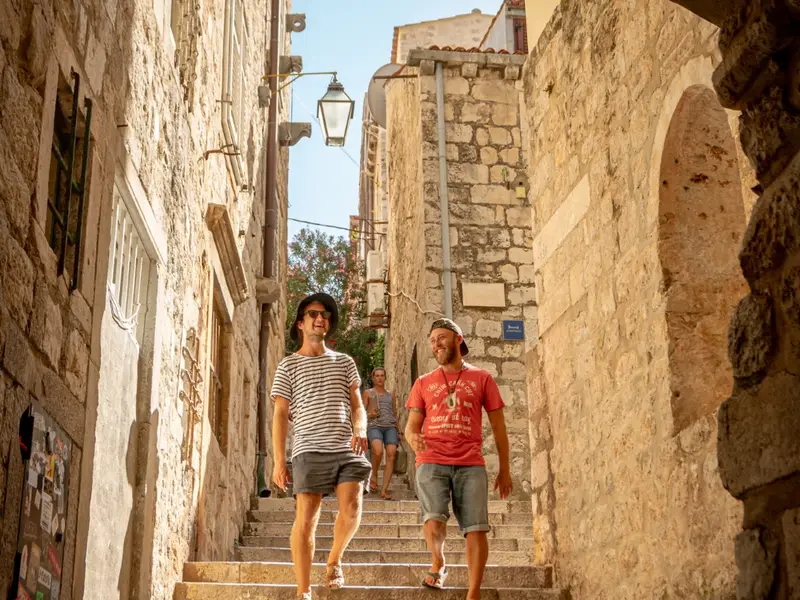
Is Croatia Less Crowded in September?
Yes, but don't expect it to feel quiet.
August is Europe's traditional holiday month, meaning popular destinations like Hvar, Split and Dubrovnik are buzzing with visitors.
By September, you'll notice:
- Slightly quieter marinas
- More space at beaches
- Easier restaurant bookings
- Less waiting for ferries and attractions
The atmosphere is still lively. Beach bars are open, restaurants are full and the islands remain full of life, just without quite the same peak-season intensity.
For many travellers, that's exactly what makes September so appealing.
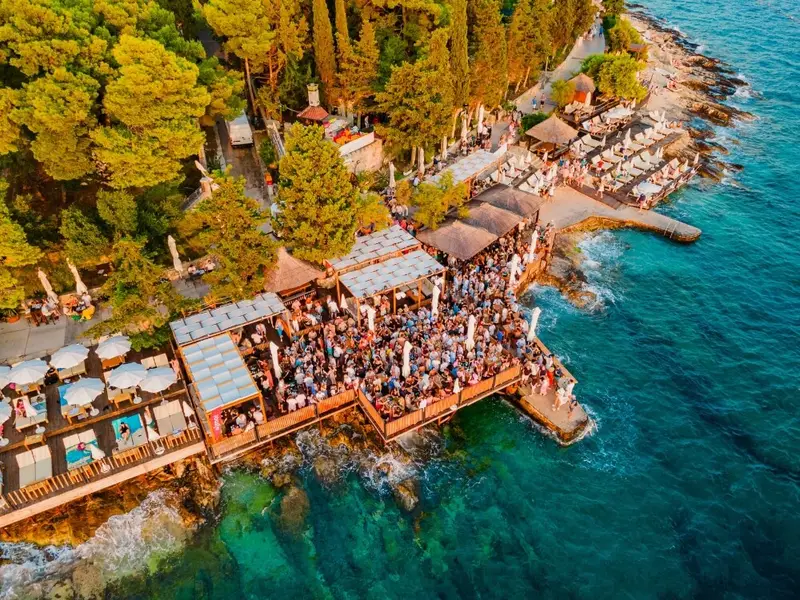
August vs September Nightlife in Croatia
If nightlife is high on your priority list, don't worry, it didn't peak in July even if the Croatia summer festivals have come and gone. The party doesn't suddenly stop when September arrives.
August offers:
- Peak beach club season
- Music festivals
- Packed bars
- Late-night parties
September still delivers:
- Busy waterfront bars
- Sunset cocktail spots
- Open-air venues
- Social hostels and sailing crews
- Great nightlife in Hvar, Split and Dubrovnik
One of the biggest advantages of an island hopping tour is that you're travelling with a group, so every night starts with new friends before heading into town together.
Best Time to Sail Croatia If You're Travelling Solo
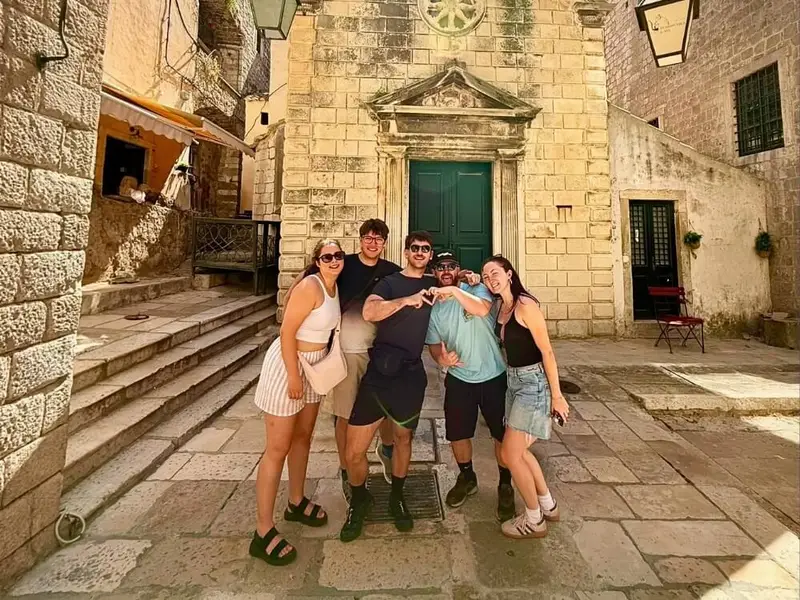
If you're travelling solo, the social side of a sailing trip matters just as much as the weather. On MedSailors, you'll join other 18–35-year-old travellers rather than sailing Croatia alone, and past guests regularly mention the friendships they make along the way as one of the best parts of the experience.
That matters just as much in August (bigger group energy, more people to meet) as it does in September (smaller, tighter groups, easier to actually get to know everyone). It isn't a "sail alone and hope for the best" kind of trip. It's built for exactly the traveller who wants adventure and people to share it with.
Choosing Your Week: A Quick Gut-Check
Still torn on travelling Croatia in August or September? Here's the fastest way to decide:
- Pick August if: you want maximum summer energy, warm water, buzzing nightlife and plenty of people to meet. It's also the pick for spontaneous travellers ready to grab a last-minute spot.
- Pick September if: you've sailed before (or just want more breathing room), you'd rather spend less and still get the warm-water experience, or you're travelling solo and want a slightly more intimate group.
Either way, you're island hopping through the same jaw-dropping Dalmatian coastline — same hidden coves, same konobas, same Adriatic blue that doesn't look real in photos until you're actually in it.
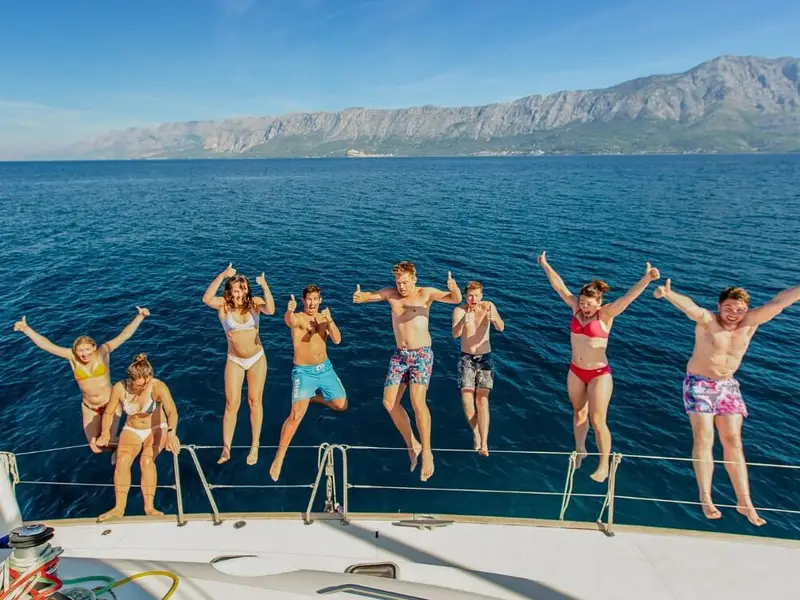
You Haven't Missed Summer in Croatia Yet
Summer isn't over yet. Late August and September are still prime time for warm-water swims, island hopping and nights out along the Dalmatian Coast.
MedSailors is currently taking bookings for both late August and September Croatia island-hopping trips. Whether you want the peak-season party energy or the quieter, warm-water September window, there's a boat, a crew, and a group of future friends waiting for you.
👉 Book your Croatia sailing trip with MedSailors now — spots for late summer are moving quickly.
Croatia August and September FAQ
Is August too hot to visit Croatia?
August is Croatia's hottest month, but being on the water makes a huge difference. Daily swim stops, sea breezes and time spent sailing help keep temperatures comfortable.
Is September still beach weather in Croatia?
Yes. September is still considered excellent beach weather, with warm sunshine and sea temperatures that are perfect for swimming.
Does Croatia shut down after August?
Not at all. September is still an active travel month along the Croatian coast, with restaurants, bars, tours and sailing trips operating throughout the month. You'll generally get fewer crowds while still enjoying plenty of summer atmosphere.
Are beach clubs still open in Croatia in September?
Yes. Many beach bars and clubs along the Croatian coast remain open through September, although individual venues can have different closing dates. Hvar, Split and Dubrovnik still have plenty happening as the peak summer season winds down.
Is Hvar still lively in September?
Yes. Hvar remains one of Croatia's liveliest islands into September, with waterfront bars, restaurants and nightlife still operating. It's generally less intense than peak August, making September a good option if you want nightlife without the biggest summer crowds.
Does it rain in Croatia in September?
September can bring more occasional rain than peak summer, but the Croatian coast still sees plenty of warm, sunny weather. Packing a lightweight waterproof layer is a smart move, particularly if you're travelling later in the month.
Which Croatian islands are best to visit in late summer?
Hvar, Vis, Korčula, Brač, Mljet and the Pakleni Islands are all fantastic during August and September, offering warm water, lively waterfronts and beautiful anchorages.
When should I book a Croatia sailing holiday?
ASAP. August and September departures are among the most popular of the year. Booking as early as possible gives you the best choice of routes, cabins and departure dates, especially during peak late-summer travel.
Is Croatia a good destination for solo travellers?
Definitely. Croatia island hopping is one of the easiest ways to meet other travellers, making it a popular choice for solo travellers, couples and groups of friends alike.
What should I pack for Croatia in August?
Pack for hot days, lots of swimming and warm nights. Bring lightweight clothes, swimwear, sandals, comfortable shoes for exploring, sunglasses, a hat and plenty of SPF. A light layer is useful for evenings on the yacht, and a reusable water bottle is essential when temperatures climb.
What should I pack for Croatia in September?
September is still very much swimwear weather, so pack much of the same summer kit: swimmers, shorts, breathable clothing, sandals, sunglasses and SPF. Add a light jumper or jacket and a thin waterproof layer for cooler evenings or the occasional shower, especially if you're sailing later in the month.
How many days do you need for Croatia island hopping?
A seven-day sailing trip is one of the most popular options, giving you enough time to visit several islands while enjoying plenty of swim stops, sightseeing and nights out.

Ryan Brown
Ryan is a corporate escape artist with a severe disdain for the mundane, a hammock addict, adrenaline junky, and experience collector. He uses various mediums to express the beauty of the world to others and to connect people to nature while showing why we should preserve it.